
C++中的引用方法
引用——定义别名,
例
int count1 = 0;
int &count2 = count1;//用在变量定义

void Swap(int&a, int&b)//用在函数形式参数定义
{
 int tmp = a;
 a = b;
 b = tmp;
}
例
从下文的例子中可以看出采用“引用”方法在函数实现的时候更加方便简单
void PushBack(SListNode **ppHead, DataType x)
{
 assert(ppHead);
 if (*ppHead == NULL)
 {
  *ppHead = _BuyNode(x);
 }
 else
 {
  SListNode *tail = *ppHead;
  while (tail!=NULL)
  {
   tail = tail->next;
  }
  tail = _BuyNode(x);
 }
}

void PushBack(SListNode* &pHead, DataType x)//使用引用 定义别名的方法实现尾插
{
 //不需断言
 if (pHead == NULL)
 {
  pHead = _BuyNode(x);
 }
 else
 {
  SListNode *tail = pHead;
  while (tail->next != NULL)
  {
   tail = tail->next;
  }
  tail->next = _BuyNode(x);
 }
}
//**********SListNode.h****************
#pragma once
#ifndef __SLISTNODE_H__
#define __SLISTNODE_H__
//--------添加头文件-----------
#include<stdio.h>
#include<stdlib.h>
#include<assert.h>
//--------链表结构------------
typedef int DateType; //定义数据类型为 int
typedef int DataType;
typedef struct SListNode
{
DataType data;
struct SListNode *next;
}SListNode;
//--------函数-------------
void PrintNode(SListNode *&pHead);//打印链表
void PushBack(SListNode* &pHead, DataType x);//使用引用 定义别名的方法实现尾插
void PushBack_p(SListNode **ppHead, DataType x);
void PopBack(SListNode* &pHead);//尾删
void PushFront(SListNode* &pHead, const DataType x);//头插
void PopFront(SListNode* &pHead);//头删
SListNode* Find(SListNode* pHead, const DataType x);//寻找data为x的结点
void Insert(SListNode* pos, const DataType x);//在pos处插入新结点
void Erase(SListNode*&pHead,SListNode* pos);//删除pos位置的结点(删除pos前的节点,删除pos位置结点更好的方法在下一篇博客论述)
#endif //__SLISTNODE_H__
//***********SListNode.cpp****函数实现*******
#include"SListNode.h"
SListNode *_BuyNode(DataType x)//开辟新结点
{
SListNode *tmp = (SListNode *)malloc(sizeof(SListNode));
tmp->data = x;
tmp->next = NULL;
return tmp;
}
void PushBack_p(SListNode **ppHead, DataType x)
{
assert(ppHead);
if (*ppHead == NULL)
{
*ppHead = _BuyNode(x);
}
else
{
SListNode *tail = *ppHead;
while (tail!=NULL)
{
tail = tail->next;
}
tail = _BuyNode(x);
}
}
void PushBack(SListNode* &pHead, DataType x)//使用引用 定义别名的方法实现尾插
{
//不需断言
if (pHead == NULL)
{
pHead = _BuyNode(x);
}
else
{
SListNode *tail = pHead;
while (tail->next != NULL)
{
tail = tail->next;
}
tail->next = _BuyNode(x);
}
}
void PopBack(SListNode* &pHead)//尾删
{
//不需断言
//注意 空、一个节点 、多个节点三种情况
if (pHead == NULL)
{
printf("SListNode is NULL\n");
return;
}
if (pHead->next == NULL)
{
free(pHead);
pHead = NULL;
}
else
{
SListNode *tail = pHead;
while (tail->next->next != NULL)
{
tail = tail->next;
}
free(tail->next);
tail->next = NULL;
}
}
void PushFront(SListNode* &pHead, const DataType x)//头插
{
//无需断言
if (pHead == NULL)
{
pHead = _BuyNode(x);
}
else
{
SListNode *tmp = _BuyNode(x);
tmp->next = pHead; //针对没有头结点的情况
pHead = tmp;
}
}
void PopFront(SListNode* &pHead)//头删
{
//不需断言
//注意 空、多个节点三种情况
if (pHead == NULL)
{
printf("SListNode is NULL\n");
return;
}
else
{
SListNode *head = pHead->next;
free(pHead);
pHead = head;
}
}
SListNode* Find(SListNode* pHead, const DataType x)
{
assert(pHead);
SListNode*tmp = pHead;
while (tmp != NULL)
{
if (tmp->data == x)
return tmp;
tmp = tmp->next;
}
printf("%d 不在此链表中\n", x);
return NULL;
}
void Insert(SListNode* pos, const DataType x)//在pos后插入新结点
{
if (pos == NULL)
{
pos = _BuyNode(x);
}
else
{
SListNode* tmp = _BuyNode(x);
tmp->next = pos->next;
pos->next = tmp;
}
}
void Erase(SListNode*&pHead, SListNode* pos)//删除pos位置后面的一个元素
{
//考虑 空、 首元结点、 非首元结点、 不存在pos位置
assert(pHead);
assert(pos);
if (pHead == pos)
{
pHead = pHead->next;
free(pos);
}
SListNode* prev = pHead;
while (prev)
{
if (prev->next == pos)
{
prev->next = pos->next;
free(pos);
pos = NULL;
break;
}
prev = prev->next;
}
return;
}
void PrintNode(SListNode *&pHead)
{
SListNode *tmp = pHead;
while (tmp)
{
printf("%d->", tmp->data);
tmp = tmp->next;
}
printf("NULL\n");
}
//***********test.cpp****************
#define _CRT_SECURE_NO_WARNINGS
#include"SListNode.h"
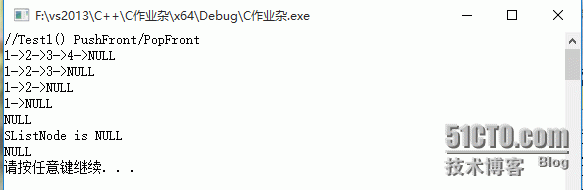
void Test1() //PushBack\PopBack
{
printf("//Test1() PushFront/PopFront\n");
SListNode *LL = NULL;
PushBack(LL, 1);
PushBack(LL, 2);
PushBack(LL, 3);
PushBack(LL, 4);
PrintNode(LL);
PopBack(LL);
PrintNode(LL);
PopBack(LL);
PrintNode(LL);
PopBack(LL);
PrintNode(LL);
PopBack(LL);
PrintNode(LL);
PopBack(LL);
PrintNode(LL);
}
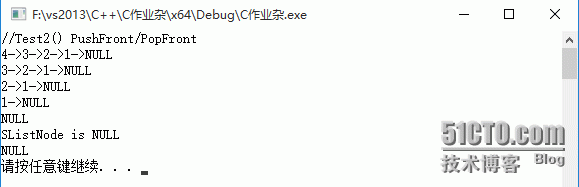
void Test2()//PushFront\PopFront
{
printf("//Test2() PushFront/PopFront\n");
SListNode *LL = NULL;
PushFront(LL, 1);
PushFront(LL, 2);
PushFront(LL, 3);
PushFront(LL, 4);
PrintNode(LL);
PopFront(LL);
PrintNode(LL);
PopFront(LL);
PrintNode(LL);
PopFront(LL);
PrintNode(LL);
PopFront(LL);
PrintNode(LL);
PopFront(LL);
PrintNode(LL);
}
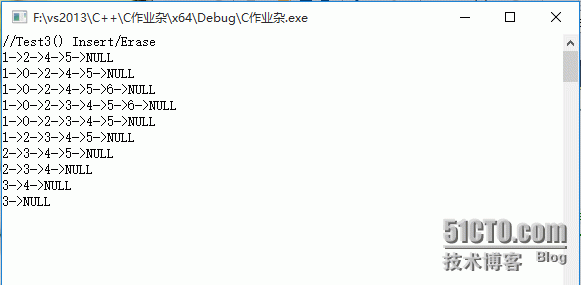
void Test3()
{
printf("//Test3() Insert/Erase \n");
SListNode *LL = NULL;
PushBack(LL, 1);
PushBack(LL, 2);
PushBack(LL, 4);
PushBack(LL, 5);
PrintNode(LL);
Insert(LL, 0);
PrintNode(LL);
Insert(Find(LL, 5), 6);
PrintNode(LL);
Insert(Find(LL, 2), 3);
PrintNode(LL);
Erase(LL, Find(LL, 6));
PrintNode(LL);
Erase(LL, Find(LL, 0));
PrintNode(LL);
Erase(LL, Find(LL, 1));
PrintNode(LL);
Erase(LL, Find(LL, 5));
PrintNode(LL);
Erase(LL, Find(LL, 2));
PrintNode(LL);
Erase(LL, Find(LL, 4));
PrintNode(LL);
Erase(LL, Find(LL, 6));//当出现链表中不存在的元素Fine函数会返回NULL,
//Erase函数第二个参数为NULL,断言assert检测到会返回错误
PrintNode(LL);
Erase(LL, Find(LL, 3));
PrintNode(LL);
free(LL);
}
int main()
{
//Test1();
//Test2();
Test3();
system("pause");
return 0;
}
在Erase(LL, Find(LL, 6));处插入断点

C/C++,数据结构单链表(采用C++"引用"方法)(寻找节点、在某处插入结点、删除某位置结点)
原文:http://10739786.blog.51cto.com/10729786/1730848