
一、泛型
ArrayList<String> nameList=new ArrayList<String>();
上述语句含义:ArrayList集合的子集只能是String类型的。
public class 泛型 {
/**
 * 泛型
 */
	public static void main(String[] args) {
		ArrayList<Person> list=new ArrayList<Person>();
		list.add(new Teacher("s001"));
	}
}
class Person{
	String name;
	int age;
}

class Teacher extends Person{
	String ID;
	Teacher(String id){
		ID=id;
		System.out.println(ID);
	}
}
结果:
s001
解析:list里能容纳Person类型的对象,其中Person的子类Teacher也可以被视为Person类所以也能被容纳进去。
二、容器类的基本概念
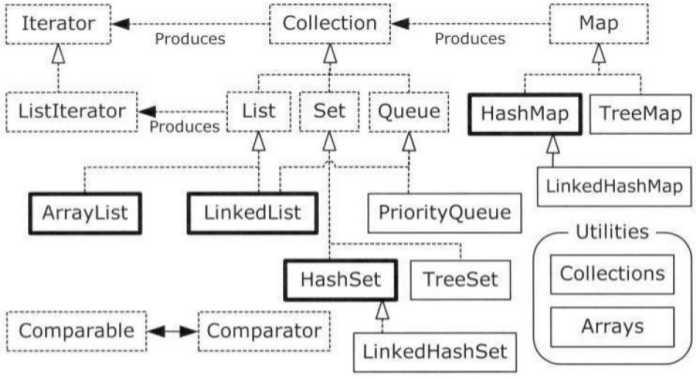
1.Colletion:Collection是最基本的集合接口,List:“有序” ,Set:"唯一",
2. Map:接口,一组成对的“键值对”对象,允许你使用键来查找值。
2.1 添加一组元素
1.Arrays.asList()方法接受一个数组或者是一个用逗号分隔的元素列表(使用可变参数),并将其转换为一个List对象。
public class Text {
	public static void main(String[] args) {
				//Arrays.asList()用法
				String[] name={"张三","李四"};
				List<String> nameList=Arrays.asList(name); //使用这种方法得到的List对象nameList不能使用add()方法和remove()方法,除非确定Lis对象长度不再改变否则慎用。
				System.out.println(nameList.get(0));

				List<Integer> intList =new ArrayList<Integer>(Arrays.asList(1,2,3));  //Colletions构造器可以接受另一个Colletion用它来初始化,asList()获得一个List对象,向上转型为Colletion类型并作为ArrayList构造器的参数初始化。
				System.out.println(intList.get(1));
				intList.add(4);   //正常使用add()
				System.out.println(intList.get(3));

	}
}
结果:
张三
2
4
解析:List<String> nameList=Arrays.asList(name); 中name可以直接用“"张三","李四"”取代。
2.Colletions.addAll()方法接受一个Colletion对象,以及一个数组或者是一个用逗号分隔的列表,将元素添加到Colletion中。
public class Text {
	public static void main(String[] args) {

		List<String> name=new ArrayList<String>();
		System.out.println(name.size());
		Collections.addAll(name, "李四","王五");
		System.out.println(name.size());
	}
}
解析:addAll()方法将所有指定元素添加到指定 collection 中。
)
原文:http://www.cnblogs.com/shyroke/p/6413128.html