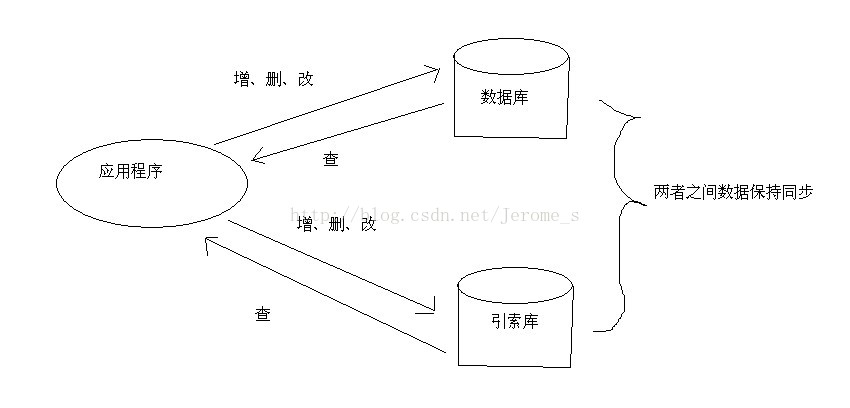
保持数据库与索引库的同步
说明:在一个系统中,假设索引功能存在,那么数据库和索引库应该是同一时候存在的。
这个时候须要保证索引库的数据和数据库中的数据保持一致性。
能够在对数据库进行增、删、改操作的同一时候对索引库也进行对应的操作。这样就能够保证数据库与索引库的一致性。
在对索引库进行操作时,增、删、改过程要把一个JavaBean封装成Document。而查询的过程是要把一个Document转化成JavaBean。在进行维护的工作中。要重复进行这种操作。所以我们有必要建立一个工具类来重用代码。
public class DocumentUtils {
	/**
	 * 从Article转化为Document
	 * @param article
	 * @return
	 */
	public static Document article2Document(Article article){
		Document document = new Document();
		Field idField = new Field("id",article.getId().toString(),Store.YES,Index.NOT_ANALYZED);
		Field titleField = new Field("title",article.getTitle(),Store.YES,Index.ANALYZED);
		Field contentField = new Field("content",article.getContent(),Store.YES,Index.ANALYZED);
		document.add(idField);
		document.add(titleField);
		document.add(contentField);
		return document;
	}
	/**
	 * 从Document转化为Article
	 * @param document
	 * @return
	 */
	public static Article document2Article(Document document){
		Article article = new Article();
		article.setId(Long.parseLong(document.get("id")));
		article.setTitle(document.get("title"));
		article.setContent(document.get("content"));
		return article;
	}
}
当这个属性的值代表的是一个不可切割的总体。比如 ID什么情况下使用Index.ANALYZED
当这个属性的值代表的是一个可切割的总体
LuceneUtils这个类把Directory和Analyzer进行了包装。由于在创建IndexWriter时,须要用到这两个类,而管理索引库的操作都要用到IndexWriter这个类,所以我们对Directory和Analyzer进行了包装
public class LuceneUtils {
	public static Directory directory = null;
	public static Analyzer analyzer = null;
	static {
		try {
			directory = FSDirectory.open(new File("./indexDir"));
			analyzer = new StandardAnalyzer(Version.LUCENE_30);
		} catch (Exception e) {
			e.printStackTrace();
		}
	}
}
 public class ArticleIndex {
	//添加
	@Test
	public void testCreateIndex() throws Exception{
		Article article = new  Article();
		article.setId(1L);
		article.setTitle("lucene能够做搜索引擎");
		article.setContent("baidu,google都是非常好的搜索引擎");

		IndexWriter indexWriter = new IndexWriter(LuceneUtils.directory,LuceneUtils.analyzer,MaxFieldLength.LIMITED);
		indexWriter.addDocument(DocumentUtils.article2Document(article));
		indexWriter.close();
	}

	@Test
	public void testSearchIndex() throws Exception{
		IndexSearcher indexSearcher = new IndexSearcher(LuceneUtils.directory);
		QueryParser queryParser = new MultiFieldQueryParser(Version.LUCENE_30, new String[]{"title","content"}, LuceneUtils.analyzer);
		Query query = queryParser.parse("baidu");
		TopDocs topDocs = indexSearcher.search(query, 2);
		ScoreDoc[] scoreDocs = topDocs.scoreDocs;
		List<Article> articleList = new ArrayList<Article>();
		for(ScoreDoc scoreDoc:scoreDocs){
			Document document =  indexSearcher.doc(scoreDoc.doc);
			Article article = DocumentUtils.document2Article(document);
			articleList.add(article);
		}

		for(Article article:articleList){
			System.out.println(article.getId());
			System.out.println(article.getTitle());
			System.out.println(article.getContent());
		}
	}

	/**
	 * 普通情况下索引库的删除用关键词
	 * @throws Exception
	 */
	@Test
	public void testDeleteIndex() throws Exception{
		IndexWriter indexWriter = new IndexWriter(LuceneUtils.directory,LuceneUtils.analyzer,MaxFieldLength.LIMITED);
		//indexWriter.deleteAll()删除全部的索引值
		/**
		 * term就为关键词对象
		 * ID的索引保存类型为Index.NOT_ANALYZED,直接写ID也能够删除。
		 * title假设为Index.NOT_ANALYZED,那么关键词就不行。要整个内容才干够删除。
		 */
		Term term = new Term("title", "lucene");
		indexWriter.deleteDocuments(term);
		indexWriter.close();
	}

	/**
	 * 改动
	 *    先删除后添加
	 * lucene的更新操作与数据库的更新操作是不一样的。
	 * 由于在更新的时候,有可能变换了keyword的位置。这样分词器对keyword还得又一次查找。
	 * 并且还得在文件夹和内容中替换。这样做的效率比較低,所以lucene的更新操作是删除和添加两步骤来完毕的。
	 */
	@Test
	public void testUpdateIndex() throws Exception{
		IndexWriter indexWriter = new IndexWriter(LuceneUtils.directory,LuceneUtils.analyzer,MaxFieldLength.LIMITED);
		Term term = new Term("title", "lucene");
		Article article = new  Article();
		article.setId(1L);
		article.setTitle("lucene能够做搜索引擎");
		article.setContent("改动后的内容");
		/**
		 * term是用删除的
		 * document是用于添加的
		 */
		indexWriter.updateDocument(term, DocumentUtils.article2Document(article));
		indexWriter.close();
	}
}
原文:https://www.cnblogs.com/mqxnongmin/p/10522612.html