
因为在某些情况下,不得不用AnyCPU,但是CefSharp支持的是86和64位俩种模式,所以在我查阅了很多国内外的资料下,总结出来的一些精华
https://ourcodeworld.com/articles/read/173/how-to-use-cefsharp-chromium-embedded-framework-csharp-in-a-winforms-application
https://github.com/cefsharp/CefSharp/issues/1714
https://github.com/cefsharp/CefSharp.MinimalExample/blob/demo/anycpu/CefSharp.MinimalExample.Wpf/App.xaml.cs
三篇结合就可以实现在AnyCPU下使用CefSharp
简述一下:
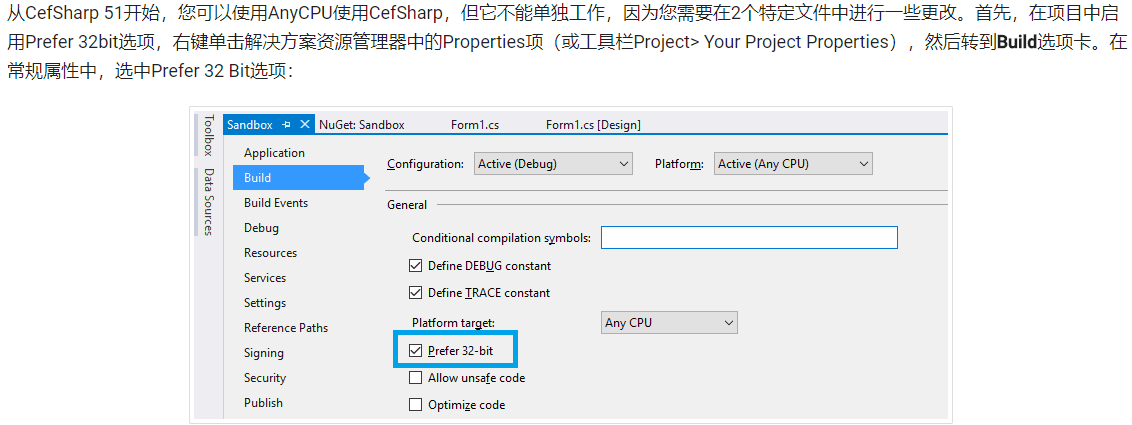
<CefSharpAnyCpuSupport>true</CefSharpAnyCpuSupport>
位置如下:
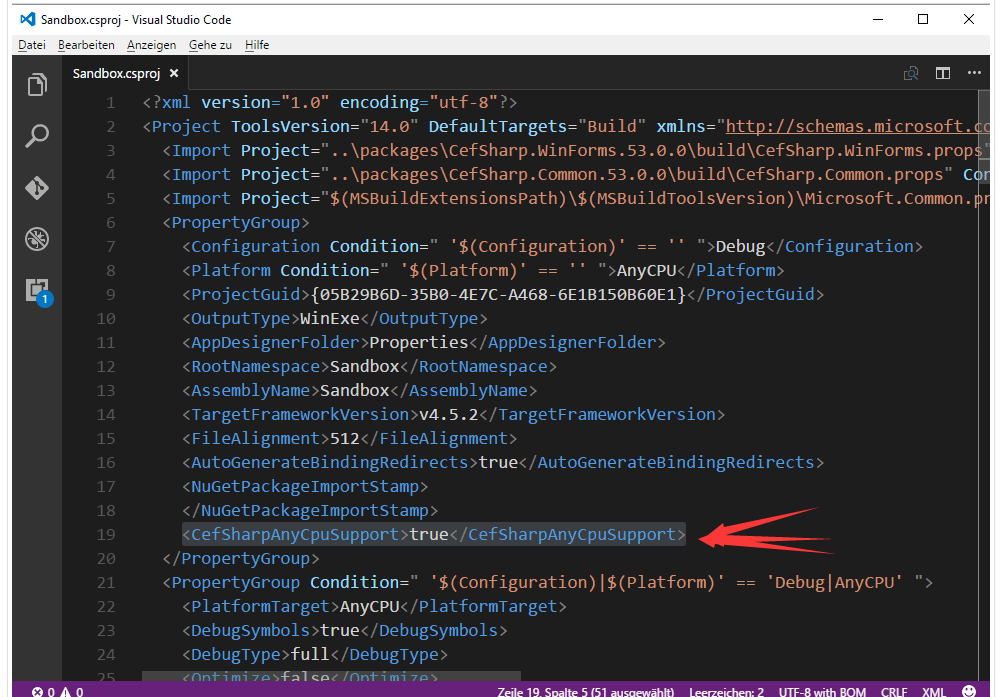
<runtime>
    <assemblyBinding xmlns="urn:schemas-microsoft-com:asm.v1">
        <probing privatePath="x86"/>
    </assemblyBinding>
</runtime>
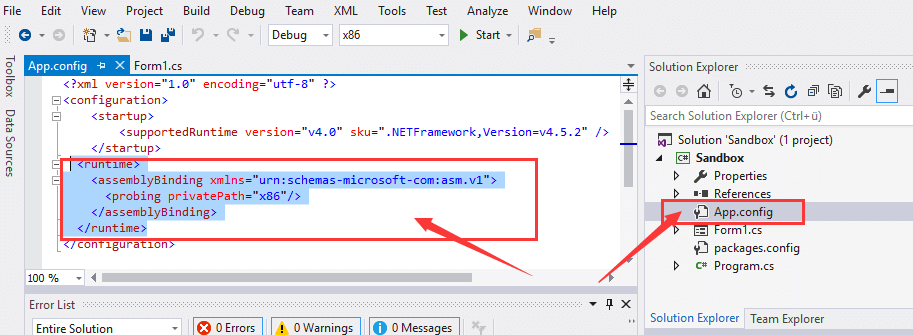
位置如下:
public partial class App : Application
{
    public App()
    {
        //Add Custom assembly resolver
        AppDomain.CurrentDomain.AssemblyResolve += Resolver;

        //Any CefSharp references have to be in another method with NonInlining
        // attribute so the assembly rolver has time to do it‘s thing.
        InitializeCefSharp();
    }

    [MethodImpl(MethodImplOptions.NoInlining)]
    private static void InitializeCefSharp()
    {
        var settings = new CefSettings();

        // Set BrowserSubProcessPath based on app bitness at runtime
        settings.BrowserSubprocessPath = Path.Combine(AppDomain.CurrentDomain.SetupInformation.ApplicationBase,
                                               Environment.Is64BitProcess ? "x64" : "x86",
                                               "CefSharp.BrowserSubprocess.exe");

        // Make sure you set performDependencyCheck false
        Cef.Initialize(settings, performDependencyCheck: false, browserProcessHandler: null);
    }

    // Will attempt to load missing assembly from either x86 or x64 subdir
    // Required by CefSharp to load the unmanaged dependencies when running using AnyCPU
    private static Assembly Resolver(object sender, ResolveEventArgs args)
    {
        if (args.Name.StartsWith("CefSharp"))
        {
            string assemblyName = args.Name.Split(new[] { ‘,‘ }, 2)[0] + ".dll";
            string archSpecificPath = Path.Combine(AppDomain.CurrentDomain.SetupInformation.ApplicationBase,
                                                   Environment.Is64BitProcess ? "x64" : "x86",
                                                   assemblyName);

            return File.Exists(archSpecificPath)
                       ? Assembly.LoadFile(archSpecificPath)
                       : null;
        }

        return null;
    }
}
using System;
using System.IO;
using System.Reflection;
using System.Runtime.CompilerServices;
using System.Windows;

namespace CefSharp.MinimalExample.Wpf
{
    public partial class App : Application
    {
        public App()
        {
            //Add Custom assembly resolver
            AppDomain.CurrentDomain.AssemblyResolve += Resolver;

            //Any CefSharp references have to be in another method with NonInlining
            // attribute so the assembly rolver has time to do it‘s thing.
            InitializeCefSharp();
        }

        [MethodImpl(MethodImplOptions.NoInlining)]
        private static void InitializeCefSharp()
        {
            //Perform dependency check to make sure all relevant resources are in our output directory.
            var settings = new CefSettings();
            settings.BrowserSubprocessPath = Path.Combine(AppDomain.CurrentDomain.SetupInformation.ApplicationBase,
                                                   Environment.Is64BitProcess ? "x64" : "x86",
                                                   "CefSharp.BrowserSubprocess.exe");

            Cef.Initialize(settings, performDependencyCheck: false, browserProcessHandler:null);
        }

        // Will attempt to load missing assembly from either x86 or x64 subdir
        // Required by CefSharp to load the unmanaged dependencies when running using AnyCPU
        private static Assembly Resolver(object sender, ResolveEventArgs args)
        {
            if (args.Name.StartsWith("CefSharp"))
            {
                string assemblyName = args.Name.Split(new[] { ‘,‘ }, 2)[0] + ".dll";
                string archSpecificPath = Path.Combine(AppDomain.CurrentDomain.SetupInformation.ApplicationBase,
                                                       Environment.Is64BitProcess ? "x64" : "x86",
                                                       assemblyName);

                return File.Exists(archSpecificPath)
                           ? Assembly.LoadFile(archSpecificPath)
                           : null;
            }

            return null;
        }
    }
}
原文:https://www.cnblogs.com/jakl/p/12222372.html