
对于直方图向量,我们引入 TF-IDF 权值
我们需要对每一个词给一个权重。而且这个权重必须满足以下两个条件:
TF-IDF 是通过增加权重的方法,凸显出重要的关键信息。同样的,在图像检索中,为了更精确地度量相似性,我们也在原来直方图向量的基础上,为向量的每一项增加权重。按照上面信息检索的方法,我们需要给字典里的每个向量(visual word)设置权重。
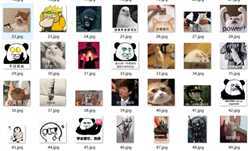
为创建视觉单词词汇,首先需要提取特征描述子,使用SIFT特征描述子,得到每幅图像提取的描述子,并将每幅图像的描述子保存在一个文件中:
# -*- coding: utf-8 -*-
import pickle
from PCV.imagesearch import vocabulary
from PCV.tools.imtools import get_imlist
from PCV.localdescriptors import sift

#获取图像列表
imlist = get_imlist(‘E:/test_pic/BOF/‘)
nbr_images = len(imlist)
#获取特征列表
featlist = [imlist[i][:-3]+‘sift‘ for i in range(nbr_images)]

#提取文件夹下图像的sift特征
for i in range(nbr_images):
    sift.process_image(imlist[i], featlist[i])

#生成词汇
voc = vocabulary.Vocabulary(‘ukbenchtest‘)
voc.train(featlist, 1000, 10)
#保存词汇
# saving vocabulary
with open(‘E:/test_pic/BOF/vocabulary.pkl‘, ‘wb‘) as f:
    pickle.dump(voc, f)
print (‘vocabulary is:‘, voc.name, voc.nbr_words)
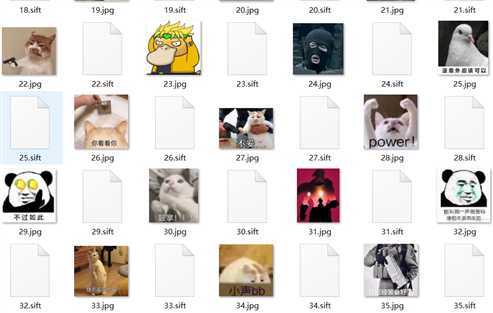
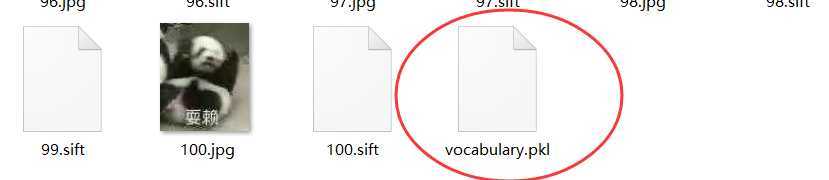
同时生成数据文件vocabulary.pkl
# -*- coding: utf-8 -*-
import pickle
from PCV.imagesearch import imagesearch
from PCV.localdescriptors import sift
from sqlite3 import dbapi2 as sqlite
from PCV.tools.imtools import get_imlist

#获取图像列表
imlist = get_imlist(‘E:/test_pic/BOF/‘)
nbr_images = len(imlist)
#获取特征列表
featlist = [imlist[i][:-3]+‘sift‘ for i in range(nbr_images)]

# load vocabulary
#载入词汇
with open(‘E:/test_pic/BOF/vocabulary.pkl‘, ‘rb‘) as f:
    voc = pickle.load(f)
#创建索引
indx = imagesearch.Indexer(‘testImaAdd.db‘,voc)
indx.create_tables()
# go through all images, project features on vocabulary and insert
#遍历所有的图像,并将它们的特征投影到词汇上
for i in range(nbr_images)[:500]:
    locs,descr = sift.read_features_from_file(featlist[i])
    indx.add_to_index(imlist[i],descr)
# commit to database
#提交到数据库
indx.db_commit()

con = sqlite.connect(‘testImaAdd.db‘)
print (con.execute(‘select count (filename) from imlist‘).fetchone())
print (con.execute(‘select * from imlist‘).fetchone())
此处会报错:

如果你不是装了所有的包,(我是安装的Anaconda,所以可以直接运行),就需要点进imagesearch中修改一下代码:
将其内部所有代码替换成为:
from numpy import *
import pickle
import sqlite3
from functools import cmp_to_key
import operator


class Indexer(object):

    def __init__(self, db, voc):
        """ Initialize with the name of the database
            and a vocabulary object. """

        self.con = sqlite3.connect(db)
        self.voc = voc

    def __del__(self):
        self.con.close()

    def db_commit(self):
        self.con.commit()

    def get_id(self, imname):
        """ Get an entry id and add if not present. """

        cur = self.con.execute(
            "select rowid from imlist where filename=‘%s‘" % imname)
        res = cur.fetchone()
        if res == None:
            cur = self.con.execute(
                "insert into imlist(filename) values (‘%s‘)" % imname)
            return cur.lastrowid
        else:
            return res[0]

    def is_indexed(self, imname):
        """ Returns True if imname has been indexed. """

        im = self.con.execute("select rowid from imlist where filename=‘%s‘" % imname).fetchone()
        return im != None

    def add_to_index(self, imname, descr):
        """ Take an image with feature descriptors,
            project on vocabulary and add to database. """

        if self.is_indexed(imname): return
        print(‘indexing‘, imname)

        # get the imid
        imid = self.get_id(imname)

        # get the words
        imwords = self.voc.project(descr)
        nbr_words = imwords.shape[0]

        # link each word to image
        for i in range(nbr_words):
            word = imwords[i]
            # wordid is the word number itself
            self.con.execute("insert into imwords(imid,wordid,vocname) values (?,?,?)", (imid, word, self.voc.name))

        # store word histogram for image
        # use pickle to encode NumPy arrays as strings
        self.con.execute("insert into imhistograms(imid,histogram,vocname) values (?,?,?)",
                         (imid, pickle.dumps(imwords), self.voc.name))

    def create_tables(self):
        """ Create the database tables. """

        self.con.execute(‘create table imlist(filename)‘)
        self.con.execute(‘create table imwords(imid,wordid,vocname)‘)
        self.con.execute(‘create table imhistograms(imid,histogram,vocname)‘)
        self.con.execute(‘create index im_idx on imlist(filename)‘)
        self.con.execute(‘create index wordid_idx on imwords(wordid)‘)
        self.con.execute(‘create index imid_idx on imwords(imid)‘)
        self.con.execute(‘create index imidhist_idx on imhistograms(imid)‘)
        self.db_commit()


class Searcher(object):

    def __init__(self, db, voc):
        """ Initialize with the name of the database. """
        self.con = sqlite3.connect(db)
        self.voc = voc

    def __del__(self):
        self.con.close()

    def get_imhistogram(self, imname):
        """ Return the word histogram for an image. """

        im_id = self.con.execute(
            "select rowid from imlist where filename=‘%s‘" % imname).fetchone()
        s = self.con.execute(
            "select histogram from imhistograms where rowid=‘%d‘" % im_id).fetchone()

        # use pickle to decode NumPy arrays from string
        return pickle.loads(s[0])

    def candidates_from_word(self, imword):
        """ Get list of images containing imword. """

        im_ids = self.con.execute(
            "select distinct imid from imwords where wordid=%d" % imword).fetchall()
        return [i[0] for i in im_ids]

    def candidates_from_histogram(self, imwords):
        """ Get list of images with similar words. """

        # get the word ids
        words = imwords.nonzero()[0]

        # find candidates
        candidates = []
        for word in words:
            c = self.candidates_from_word(word)
            candidates += c

        # take all unique words and reverse sort on occurrence
        tmp = [(w, candidates.count(w)) for w in set(candidates)]
        tmp.sort(key=cmp_to_key(lambda x, y: operator.gt(x[1], y[1])))
        tmp.reverse()

        # return sorted list, best matches first
        return [w[0] for w in tmp]

    def query(self, imname):
        """ Find a list of matching images for imname. """

        h = self.get_imhistogram(imname)
        candidates = self.candidates_from_histogram(h)

        matchscores = []
        for imid in candidates:
            # get the name
            cand_name = self.con.execute(
                "select filename from imlist where rowid=%d" % imid).fetchone()
            cand_h = self.get_imhistogram(cand_name)
            cand_dist = sqrt(sum(self.voc.idf * (h - cand_h) ** 2))
            matchscores.append((cand_dist, imid))

        # return a sorted list of distances and database ids
        matchscores.sort()
        return matchscores

    def get_filename(self, imid):
        """ Return the filename for an image id. """

        s = self.con.execute(
            "select filename from imlist where rowid=‘%d‘" % imid).fetchone()
        return s[0]


def tf_idf_dist(voc, v1, v2):
    v1 /= sum(v1)
    v2 /= sum(v2)

    return sqrt(sum(voc.idf * (v1 - v2) ** 2))


def compute_ukbench_score(src, imlist):
    """ Returns the average number of correct
        images on the top four results of queries. """

    nbr_images = len(imlist)
    pos = zeros((nbr_images, 4))
    # get first four results for each image
    for i in range(nbr_images):
        pos[i] = [w[1] - 1 for w in src.query(imlist[i])[:4]]

    # compute score and return average
    score = array([(pos[i] // 4) == (i // 4) for i in range(nbr_images)]) * 1.0
    return sum(score) / (nbr_images)


# import PIL and pylab for plotting
from PIL import Image
from pylab import *


def plot_results(src, res):
    """ Show images in result list ‘res‘. """

    figure()
    nbr_results = len(res)
    for i in range(nbr_results):
        imname = src.get_filename(res[i])
        subplot(1, nbr_results, i + 1)
        imshow(array(Image.open(imname)))
        axis(‘off‘)
    show()
运行上面代码后,会在根目录生成建立的索引数据库testImaAdd.db
# -*- coding: utf-8 -*-
import pickle
from PCV.imagesearch import imagesearch
from PCV.localdescriptors import sift
from sqlite3 import dbapi2 as sqlite
from PCV.tools.imtools import get_imlist

#获取图像列表
imlist = get_imlist(‘E:/test_pic/BOF/‘)
nbr_images = len(imlist)
#获取特征列表
featlist = [imlist[i][:-3]+‘sift‘ for i in range(nbr_images)]

#载入词汇
f = open(‘E:/test_pic/BOF/vocabulary.pkl‘, ‘rb‘)
voc = pickle.load(f)
f.close()

src = imagesearch.Searcher(‘testImaAdd.db‘,voc)
locs,descr = sift.read_features_from_file(featlist[0])
iw = voc.project(descr)

print (‘ask using a histogram...‘)
print (src.candidates_from_histogram(iw)[:5])

src = imagesearch.Searcher(‘testImaAdd.db‘,voc)
print (‘try a query...‘)
print(src.query(imlist[0])[:5])

nbr_results = 5
res = [w[1] for w in src.query(imlist[0])[:nbr_results]]
imagesearch.plot_results(src,res)

输入的图像:

运行结果:
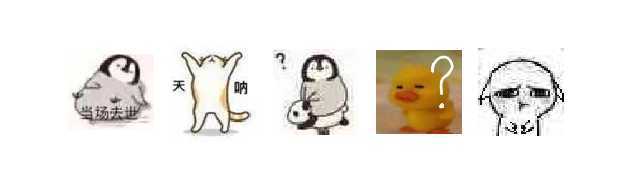
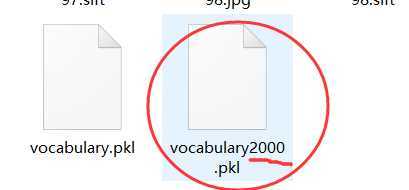
生成新的文件
输入图像:

运行结果:

原文:https://www.cnblogs.com/bokeyuancj/p/12876406.html